

Key Takeaways
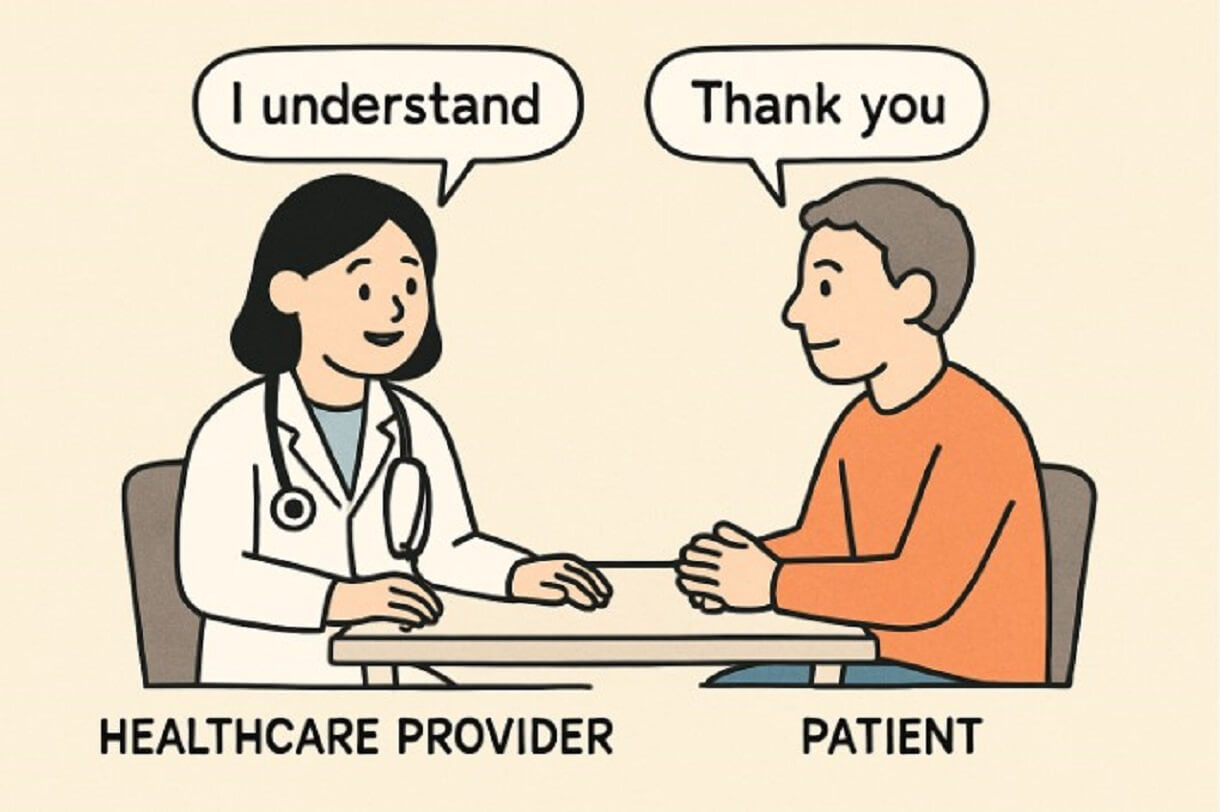
- To mitigate stress and confusion, facts must be delivered with empathy, reassurance, and clarity.
- Understanding and expectations must align for proper decision-making.
- Additional support to tackle strong emotions should be given to patients.
- Patients should be encouraged to ask questions and clear any doubts for seamless understanding.
- Regular check-ups can make the patient more comfortable during prolonged recovery.
Understanding the Importance of Effective Communication
The issue of uncommon results while recovering from any health hazard is becoming more and more prevalent among many patients. However, to alleviate such a problem, clear communication must flow among the patient, their doctor, and their family. This is necessary because it helps to reduce uncertainty and anxiety while enhancing a sense of credibility and security, allowing patients to make much better and thoughtful decisions for their said recovery. Patients suffering from a Down syndrome diagnosis can harness these advantages to make their recovery even more efficient.
Moreover, doctors and caretakers must ensure that they focus on context as well as the interpretation of both diagnosis and treatment, rather than depending on mere facts. If the conversations are full of empathy, both patients and their families will be able to understand the issue and prepare accordingly. Such communication is needed to create transparency between the patient and the doctor so that they can freely decide what they want to do in the future or during their recovery.
Assessing Patient Understanding and Expectations
doctors must begin by asking some clear and open-ended questions of their patients, such as whether they acknowledge what is happening to them or not/ or how they actually perceive that situation. These small conferences play a huge role in mitigating misunderstandings or uncertainty. Furthermore, these kinds of communications are customized to peer into the nature and psyche of a particular patient, which further alleviates wrong assumptions or doubts.
The doctors must consult a patient’s family as well to learn about what they feel about this situation and what they are anticipating at the end of the recovery. It must be noted that the expectations of both patients and their families must be according to the facts of the medical field. Otherwise, hopes can be shattered, and a disagreement may arise.
Delivering Information with Empathy and Clarity
Any kind of news given to the patient and their loved ones must be delivered with soft and compassionate words. Doctors should be honest and use simple language to avoid any misunderstanding or complexity for patients. For instance, phrases like “the cancer is increasing” instead of “the tumor is metastasizing are increasing. Such a kind of deliverance of messages is important in situations where emotions or stress can take a toll on one’s mental well-being.
Doctors must ensure that the patient can decipher what they have listened to. Clarification can be enhanced by asking them to explain the situation in their own words.
Providing Support and Resources
emotions like anxiety, sadness, or grief arise when the diagnosis fluctuates. In such a situation, support groups such as social workers can be a great help for patients to navigate their feelings and stay hopeful. There is a specific organisation, like Mayo Clinic, that promotes the idea of giving interpersonal and emotional aid together to gain better results.
Encouraging Questions and Active Participation
Proper space and freedom must be given to patients so they can ask whatever and want and clear their dilemma. Doctors should allow them to talk freely about their confusion, fear, and expectations. Such practice not only reduces misunderstandings but also encourages patients to make decisions on their own.
Patients also feel a sense of control when they are clear about their diagnosis and recovery. All the decisions must be made with the consent of patients to respect their beliefs, concerns, and values.
Utilizing Visual Aids and Written Materials
Understanding medical facts is quite a task when possible results and further decisions are discussed. Doctors and health providers should use illustrations, drawings, or diagrams to make the concept much simpler and understandable for the patient. Patients must be provided with pamphlets and concise summaries that they can take home and discuss the issue with their families easily. This allows them to recall all the information promptly.
Preparing for Emotional Reactions
Patients might feel strong emotions such as anger, grief, or anxiety when they are in confusion. So, doctors should know how to tackle these emotions while providing support to their clients. The environment must be safe and free of any judgment in which patients are encouraged to feel and express every emotion however they want. In such a situation, even difficult conversations can become easy and manageable.
Doctors must remain consistent and have patience since many patients or families are unable to grasp the situation in just one conversation. Constant support and empathy in such a scenario are a must.
Following Up and Providing Continuous Support
Regular meetups with patients are necessary when they get to know about a devastating health issue. Appointments with the doctor after short intervals allow patients to review the facts and clear future doubts. Forming a close bond with health providers can enhance a patient’s recovery by providing them with supportive acquaintances.
Quick appointments also help to clear previous questions, and the patient can easily learn about new facts about their recovery. Due to this, many patients feel like they are being heard, which gives them a sense of control over the situation.
Final Thoughts
To conclude, we can say that delivery of any information to the patient should be given with proper empathy and clarity. Doctors should work on these communication skills instead of stating mere facts that can be overwhelming for both the patient and their family. Constant support, empathetic communication, two-way conversation, and detailed follow-up are a few of the methods that can have a great deal of positive impact on one’s recovery. Emotions like trust, safety, and credibility are enhanced when such practices are used in healthcare.

